

When Operations Outgrow Hand Wrapping: Transitioning to Machine Stretch Wrap
As your business continues to grow, you will reach a point where hand wrapping becomes a limitation rather than the most efficient method to wrap your pallets. Recognizing when it’s time to invest in a pallet wrapper and machine stretch wrap is essential to keep operations running smoothly.
When Operations Outgrow Hand Wrapping
Here are a few tipping points that indicate using hand wrap may no longer be the most effective solution.
Key Tipping Points
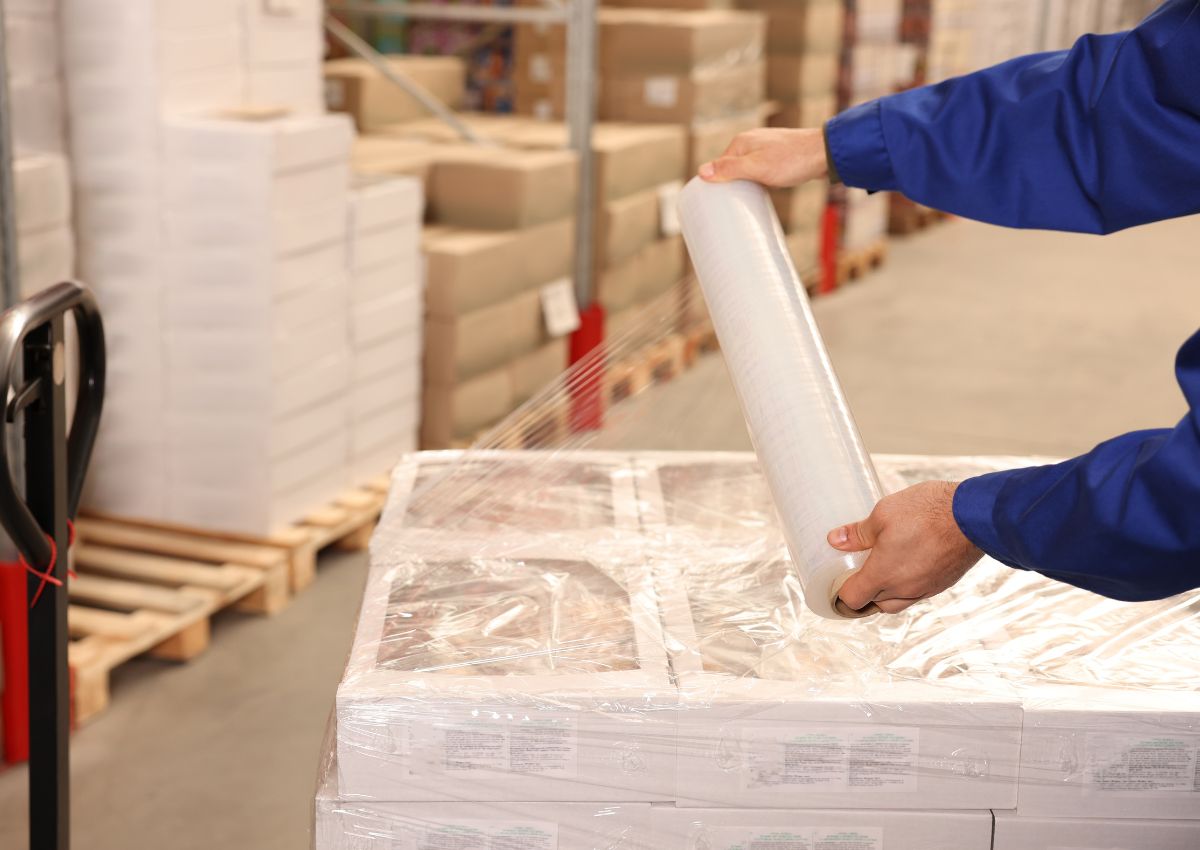
Hand wrapping pallets: Efficient for low volumes, but limiting as operations scale
- Increased volume
As your volume increases, employees may struggle to keep up with demand. Although there isn’t a specific number of pallets that signal when to switch to machine wrap, you may want to consider making the change if you wrap 15-20 pallets per day. - Inconsistent load containment
From one employee to another, everyone wraps differently. One advantage of switching to a pallet wrapper and machine wrap is containment consistency; your wrapping process becomes much more measurable. - Safety concerns
Hand wrapping requires repetitive bending, twisting, and pulling. If physical strain on your employees becomes a concern, it’s time to switch over to machine wrapping. - You’re using too much hand wrap
There could be many reasons for this, such as compensating for an unstable load, tearing, or breaking. Nonetheless, switching to machine wrap tends to be more cost-effective. - Your pallets are increasing in size or weight
If your pallets require stronger containment, hand wrap may no longer be the most dependable option.
There is a point where hand wrapping no longer supports operational growth, and while machine wrapping is a significant step forward, it's not the entire solution. You will want to ensure you select the right machine wrap for your specific needs, or the transition may not provide optimal results.

Automatic/Semi Automatic pallet wrappers deliver consistency, speed, and efficiency for growing operations
Why Choosing the Right Machine Wrap is Important
Choosing the right machine wrap for your specific requirements is more important than you might initially think. It directly impacts your load stability, product protection, containment force, consistency, cost efficiency, and overall operational performance. Using the wrong wrap can lead to several costly and avoidable problems.
Loads vary in weight, shape, and handling conditions, so there’s no one-size-fits-all solution. The ideal machine wrap depends on the load you are wrapping, the pallet wrapping equipment you have, its settings, and the environment.
Machine performance is important. High-performance machine wrap offers many benefits but only when paired with the right equipment. Each pallet wrapper is built with a specific pre-stretch level, which determines the amount the wrap is stretched before it reaches the load. A good machine will have the ability to adjust tension, speed, rotations and more. The type of pallet wrapper and the type of machine wrap used will decide how effectively it performs.
A high-quality machine wrap can be pre-stretched by 200–300%, resulting in more surface area covered per roll, less film usage per load and improved load stability. However, if the machine is unable to take advantage of this you will be wasting your money on a film that cannot reach its potential.
Not ready to invest in a new machine? That’s okay. We can help you select a film that’s compatible with your existing equipment. If your current pallet wrapper can’t handle high-performance machine wrap, we can suggest an alternative, so you get the best results for your operation. Contact us today.
The Real Efficiency Question: How Do I Know If I Am Using the Right Wrap?
When the right machine wrap matches the appropriate setup, you should see a consistent and even film application. The film should not tear, it should be snug without crushing the product, and the load should stay firm and secure when pushed or shaken. The goal is to use as little film as possible while achieving optimal containment.
On a well-maintained machine, your application process should run smoothly and generate minimal waste. In short, using the right machine wrap protects your product, maximizes performance, and keeps costs predictable.
Signs You’re Not Using the Right Wrap
Using the wrong machine wrap is like wearing sandals in the snow; technically, you can, but you’ll regret it. These signs are often less obvious than expected, but they quietly appear in your daily operations.
- Excessive use of machine stretch wrap
If you’re using the right machine wrap, you shouldn’t be overwrapping your pallets. So, if your rolls are running out faster than expected, reconsider your choice. Use a machine wrap that is strong enough and has the capability to stretch appropriately to fit your specific requirements.
It is also important to note that often the cause of excessive use could be related to employee interaction. If employees adjust the optimal machine settings when they should not be to compensate for an issue this can create film waste and have a negative effect on your load stability. We encourage all companies to mark optimal settings and train those using the equipment not to adjust unless wrapping a skid out of your normal standard. - Insufficient puncture resistance
When machine wrap tears or punctures easily, you may need a higher performance machine wrap. - Performance drops in your environment
Stretch wrap reacts differently depending on temperature and humidity. For instance, in cold conditions, some wraps may become brittle, crack, lose cling, or fail to recover as expected. Whether in cold storage, outdoor loading, or humid warehouses, you will need a machine wrap and application process suited to those specific conditions. - Load shifting
Load shifting occurs when products on a pallet move or slide during handling or transport. This may suggest that your current machine wrap does not provide enough containment, does not stretch correctly, or is losing tension over time. - Film breaks or tension issues
If your machine wrap breaks more often than a New Year’s resolution, it’s time for an evaluation. This may be a sign that the film is too thin or not compatible with your machine’s pre-stretch rollers. - Frequent machine adjustments
If operators constantly need to adjust the tension or speed just to keep the film running, something is off. Your current machine wrap may not be well-matched to your pallet wrapper, or your settings may need to be optimized. - You’re spending more than you should
The cost may not always be obvious when looking at the rolls on the shelf, but it can be felt in your day-to-day operations, especially if you’re constantly replacing torn or wasted film. Take a closer look at your wrapping cycle. Optimizing the amount of machine wrap used can reduce rotation and eliminate unnecessary layers, using less film and saving time per pallet. This boosts efficiency and lowers overall material costs.
How Do I Choose the Right Machine Wrap
When choosing between machine wrap, many factors must be considered. As mentioned earlier, it’s important to understand that no single wrap is suitable for every situation. For example, if you are using a pallet wrapper with consistent pre-stretch systems, the ideal choice is usually a high-performance machine wrap. In contrast, for an older or lower-tension pallet wrapper, a more forgiving machine wrap might be the better option.
You’ll also want to note that choosing the right film is never simply about the thickness (gauge) but about matching machine wrap performance to load characteristics and pallet wrapper capabilities.
Machine Wrap Overview

High-performance machine stretch wrap: Thinner, stronger, and more efficient
- Standard Machine Wrap
It is the most commonly used machine wrap and designed for everyday applications.
Good For: Consistent, moderate to heavy loads and general warehouse applications. - High-Performance Machine Wrap
This upgraded machine wrap uses advanced formulations to deliver increased strength, superior elasticity, and improved puncture resistance without adding thickness.
Good For: Heavier loads, higher speeds, reducing consumption, lowering cost-per-pallet. - Ventilated Machine Film

Ventilated wrap: Ideal for perishable goods requiring airflow
Ventilated machine wrap allows airflow through the load to reduce condensation and spoilage while enhancing load stability.
Good For: Palletizing perishable items, fresh produce, and products stored in cold environments—helping keep them secure and fresh during transit. - Specialty Machine Wrap: VpCI and Antistatic
VpCI Machine Wrap: This specialized wrap provides static control for sensitive electronics or corrosion resistance for metal components during shipping or storage.
Good For: Industrial equipment, metal parts, and loads requiring corrosion protection.
Antistatic machine wrap: Prevents electrostatic discharge (ESD), protecting sensitive electronics and components during storage and transport.
Good For: Electronics manufacturing, cleanrooms, and static-sensitive environments.
Want to be sure you are choosing the right machine stretch wrap for your specific needs? Contact us and ask about our FREE Rite gauging assessment.
Will a New Pallet Wrapper Improve My Efficiency?
In most cases, yes. Newer machines deliver better pre-stretch, more consistent tension, and faster cycle times. If your current pallet wrapper is ageing, needs manual adjustments, or causes frequent film breaks, an upgrade often results in noticeable gains.
The biggest improvements usually show up in the following areas:
- Film usage: Improved pre-stretch can reduce film use by 10 to 30 percent.
- Cycle time: Faster, more automated wrap cycles can save 20 to 40 seconds per pallet.
- Labour: Features like cut-and-clamp and auto start reduce operator involvement and may free up time in busy facilities.
A more efficient pallet wrapper typically shows its value in your cost per wrapped pallet. As that number trends down, you’ll have a clearer picture of the impact.
How Whitebird Helps You Get to the Right Solution Through Rite® Gauging
Rite-Gauging® is a measurable, repeatable approach to machine wrap application. This structured method evaluates film type, thickness, pre-stretch, overlap, and wrap force to ensure equal containment from the top to the bottom of every pallet.
A Whitebird Sales Professional can complete a full FREE on-site Rite-Gauging® Package Assessment in under an hour. During the visit, we test your loads, fine-tune machine settings, validate containment force and identify opportunities to reduce waste and improve performance without pushing you toward the most expensive film. Our goal is to help you get the best-value wrap for your operation while maximizing stability and reducing risk.
With our machine expertise and direct access to industry-leading suppliers, customers gain a clear path to a more efficient and cost effective packaging operation.
Ready to optimize your pallet wrapping process? Contact Us today for a FREE Rite® Gauging assessment and discover your hidden efficiencies.


